
GMAT preparation is the first and most important step for students aiming to secure admission to top MBA and management programs worldwide. The GMAT (Graduate Management Admission Test) is a globally recognized standardized entrance exam accepted by leading business schools and universities.
The exam is designed to assess a candidate’s quantitative ability, verbal reasoning, analytical thinking, and data interpretation skills—key competencies required for success in management education. With a well-structured GMAT preparation strategy, students can significantly improve their performance and boost their chances of achieving a competitive GMAT score.
If you are planning to pursue an MBA abroad or apply to top business schools, focused and strategic GMAT preparation plays a crucial role in strengthening your overall application.

GMAT Exam Syllabus – Overview
The GMAT syllabus is designed to test both academic knowledge and practical reasoning abilities. The exam is divided into the following four major sections:
- Quantitative Reasoning – Tests problem-solving skills and mathematical concepts
- Verbal Reasoning – Evaluates reading comprehension, critical reasoning, and sentence correction
- Data Insights – Focuses on data analysis, interpretation, and logical reasoning
- Analytical Writing – Assesses structured thinking and written communication skills
Understanding the syllabus at an early stage helps students plan their GMAT preparation more effectively.
GMAT Exam Pattern
The GMAT is a computer-based and adaptive exam. This means the difficulty level of questions adjusts based on the candidate’s performance during the test
Key features of the GMAT exam pattern include:
- Time-bound sections
- Adaptive question difficulty
- Standardized scoring system
- Flexibility in section order
A clear understanding of the GMAT exam pattern is essential for efficient time management and score optimization.
What You’ll Learn
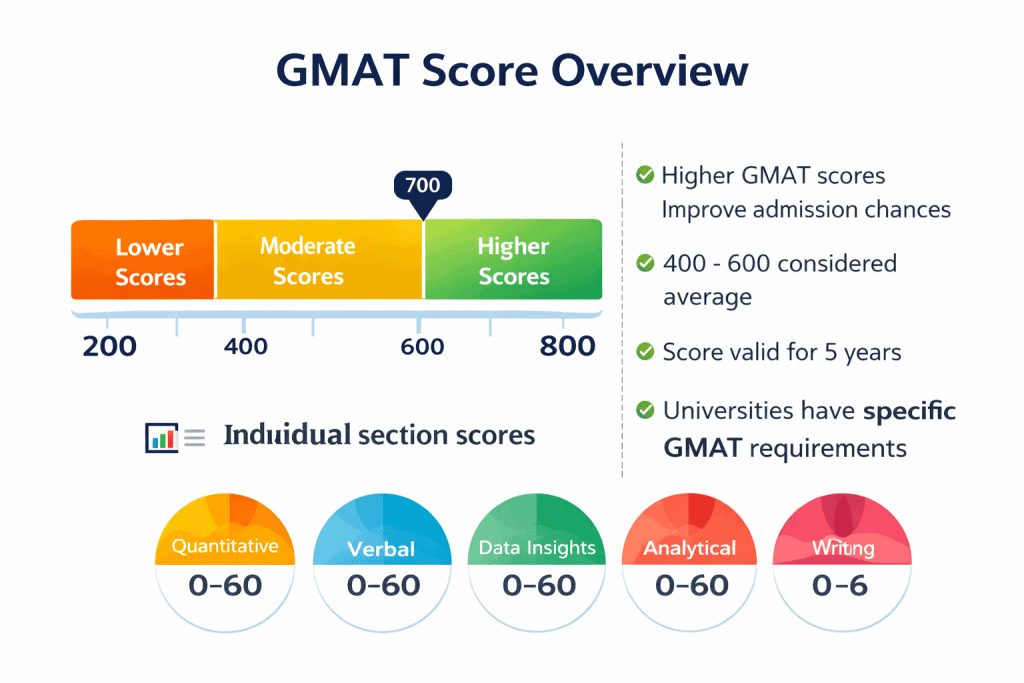
GMAT Score Overview
The GMAT score reflects a candidate’s overall performance and readiness for business school programs. Business schools consider the GMAT score as an important benchmark during the admissions process.
- Higher GMAT scores improve admission chances
- Different universities have different GMAT score requirements
- Along with the score, a candidate’s overall academic and professional profile is also evaluated
With structured GMAT preparation and consistent practice, candidates can significantly improve their scores.
GMAT Preparation – How to Get Started
Effective GMAT preparation requires a structured and disciplined approach. Students who follow a clear study plan tend to perform better and manage exam pressure more confidently.
Key steps for GMAT preparation include:
- Understanding the exam structure and syllabus
- Creating a personalized study schedule
- Practicing regularly with mock tests
- Identifying and improving weak areas
Many students prefer guided GMAT preparation to stay consistent and avoid common preparation mistakes.
| Factor | Self Study GMAT Preparation | Coaching / Guided GMAT Preparation |
|---|---|---|
| Cost | Low | Medium to High |
| Study Flexibility | High | Medium |
| Doubt Solving | Limited | Expert Support |
| Study Structure | Self Planned | Structured Plan |
| Mock Test Analysis | Basic | Detailed Analysis |
| Score Improvement Speed | Slower | Faster |
| Best For | Self disciplined students | Target 650+ / 700+ students |
GMAT Preparation Strategy to Score 700+
This video explains a practical GMAT preparation strategy, including how to plan your study schedule, improve section-wise performance, and work towards a 700+ GMAT score. It is especially useful for first-time test-takers and working professionals.
👉 Watch the video above to understand how GMAT preparation and scoring strategy work together.
Why Structured GMAT Preparation Is Important
GMAT is a competitive exam, and unplanned preparation often leads to confusion and inconsistent results. Structured GMAT preparation offers several advantages:
- Clear preparation roadmap
- Efficient use of time and resources
- Focused improvement in weak sections
- Increased exam confidence
Expert guidance and a well-planned strategy can make a significant difference in overall performance.
Get Expert Guidance for GMAT Preparation
If you are looking for professional support to improve your GMAT performance, structured guidance can help you prepare more effectively.
Expert mentors assist students in building personalized study plans based on their academic background, goals, and timelines.
FAQ
1. What is the GMAT exam used for?
The GMAT exam is used by business schools and universities to evaluate candidates applying for MBA and management programs. It helps institutions assess a student’s academic readiness and analytical skills.
2. Is GMAT required for MBA abroad?
Yes, most top international business schools require GMAT scores for MBA admissions. However, requirements may vary depending on the university and program.
3. How long does GMAT preparation take?
GMAT preparation usually takes between 3 to 6 months depending on the candidate’s current skill level, study consistency, and target score.